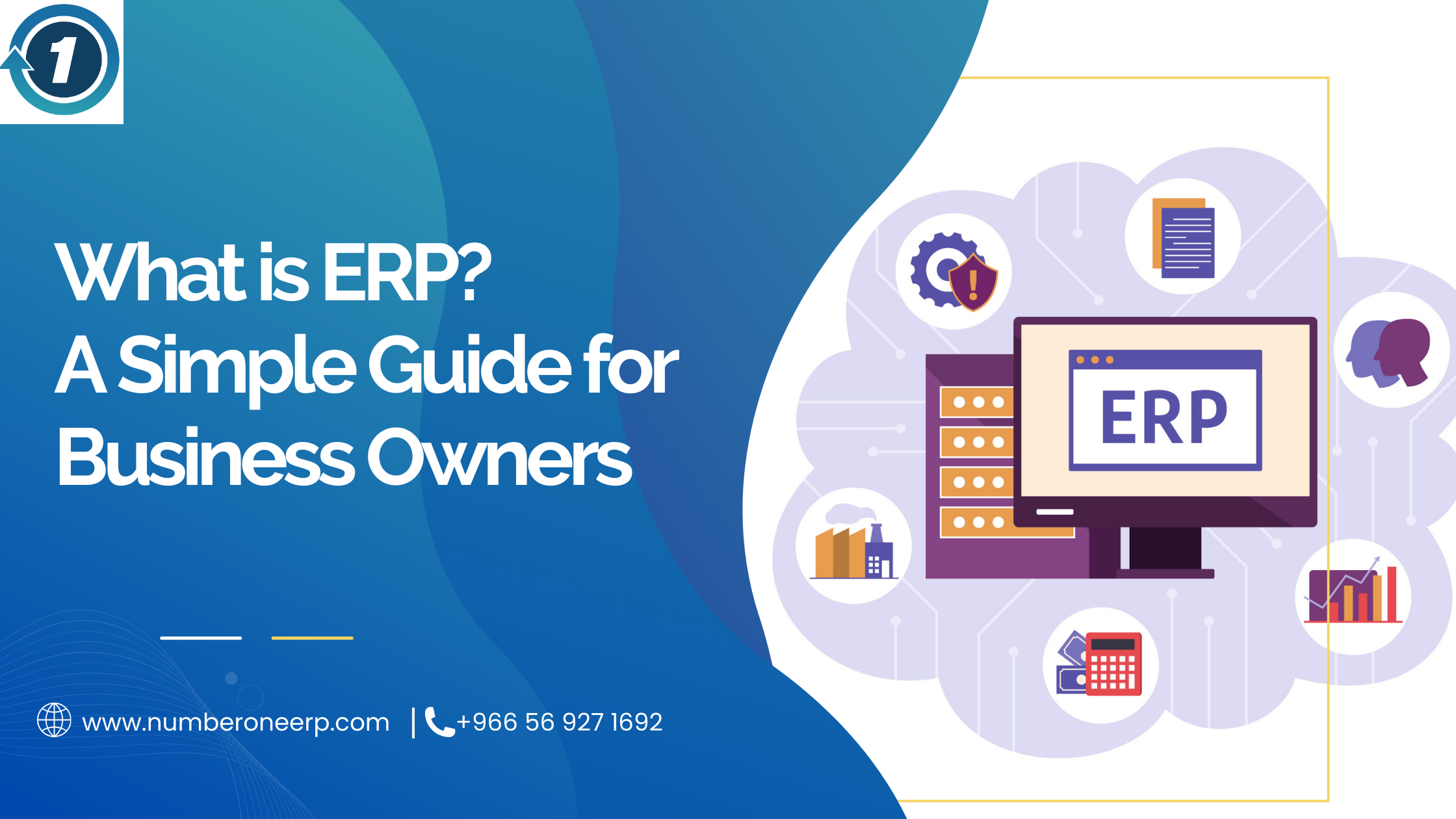
In the fast-paced business landscape of 2026, the term ERP (Enterprise Resource Planning) is no longer just a buzzword for Fortune 500 companies. For small and mid-sized business owners, it has become the “digital backbone” necessary to survive in a world driven by AI and instant gratification.
But what exactly is it? Strip away the technical jargon, and ERP is simply a software system that connects all the different parts of your business, from finance and HR to inventory and sales, into one unified platform.
The “Central Nervous System” of Your Business
Imagine your business as a human body. Your departments (Sales, Warehouse, Accounting) are like limbs. Without a brain to coordinate them, they move independently, often in conflicting directions.
An ERP acts as the central nervous system. When a customer places an order on your website, the “brain” (the ERP) instantly tells the warehouse to pack the item, alerts the accounting team to send an invoice, and updates your sales forecast, all without a single manual email or spreadsheet update.
Why Business Owners are Switching in 2026
If you’re still relying on basic accounting software and a dozen “bridge” spreadsheets, you’re likely feeling the friction. Here is why modern ERP systems have become essential:
- Predictive AI, not just reporting: In 2026, ERPs don’t just tell you what you sold yesterday. They use Predictive Analytics to tell you what you’ll likely sell next month, allowing you to optimize stock levels and cash flow before a crisis hits.
- The “Single Source of Truth”: Tired of your sales team saying they have stock while the warehouse says they’re empty? An ERP ensures everyone looks at the same real-time data.
- Hyper-Automation: Modern systems now handle the “drudge work.” AI-driven workflows can automatically approve invoices, route purchase orders, and even flag potential fraud patterns, freeing your team for strategic growth.
- Sustainability Tracking (ESG): With new 2026 regulations, many business owners now use ERPs to track their carbon footprint and resource waste, a task that is nearly impossible to do manually
ERP vs. Accounting Software: What’s the Difference?
While accounting software is excellent for tracking money in and money out, it is a specialist tool. An ERP is a generalist powerhouse. It includes a full accounting suite but adds layers for:
- Inventory & Supply Chain: Real-time tracking from raw materials to the customer’s doorstep.
- CRM (Customer Relationship Management): Managing the entire lifecycle of a lead.
- HR & Payroll: Tracking employee performance and automated salary disbursements.
| Feature | Accounting Software | Modern ERP (2026) |
| Focus | Financial transactions only | Entire business ecosystem |
| Data | Historical (what happened) | Predictive (what will happen) |
| Automation | Basic (invoicing) | Advanced (AI-driven workflows) |
| Scalability | Limited | High (Modular growth) |
Is Your Business Ready?
You don’t need to be a global giant to benefit from an ERP. In fact, waiting too long is a common growth killer. You are ready for an ERP if:
- You’re “Spreadsheet Stressed”: You spend more time updating data than analyzing it.
- Information is Siloed: It takes days to get a simple report on total company health.
- Customer Experience is Dropping: Orders are late or incorrect because of communication gaps.
The Bottom Line
In 2026, an ERP is no longer a luxury, it’s an efficiency requirement. It moves your business from reactive (fixing problems) to proactive (preventing them). By centralizing your data, you gain the clarity needed to scale without the chaos.
For more info, contact us today!